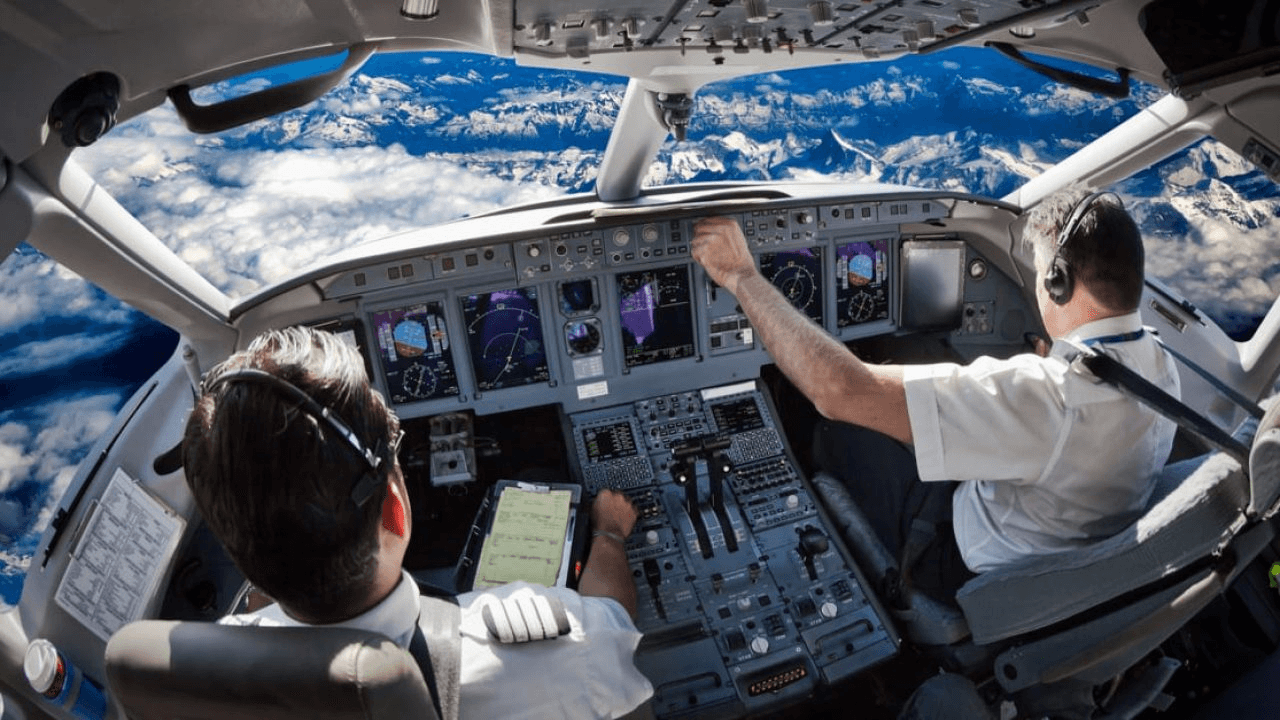

Airline pilot: job profile, missions and daily life
Discover the role of an airline pilot — the missions, the daily routine, the responsibilities and the qualities needed to do the job.
What does the job of an airline pilot involve?
Being an airline pilot means safely operating a commercial aircraft within an airline. Before every flight, the pilot plans the route, analyses the weather, checks operational data and coordinates decisions with the crew.
During the flight, they monitor the aircraft's systems, communicate with air traffic control, apply procedures and make the decisions needed to ensure the safety, punctuality and comfort of passengers.
It is a job that is both technical and human: it calls for rigour, composure, good communication and the ability to decide quickly within a tightly regulated environment.
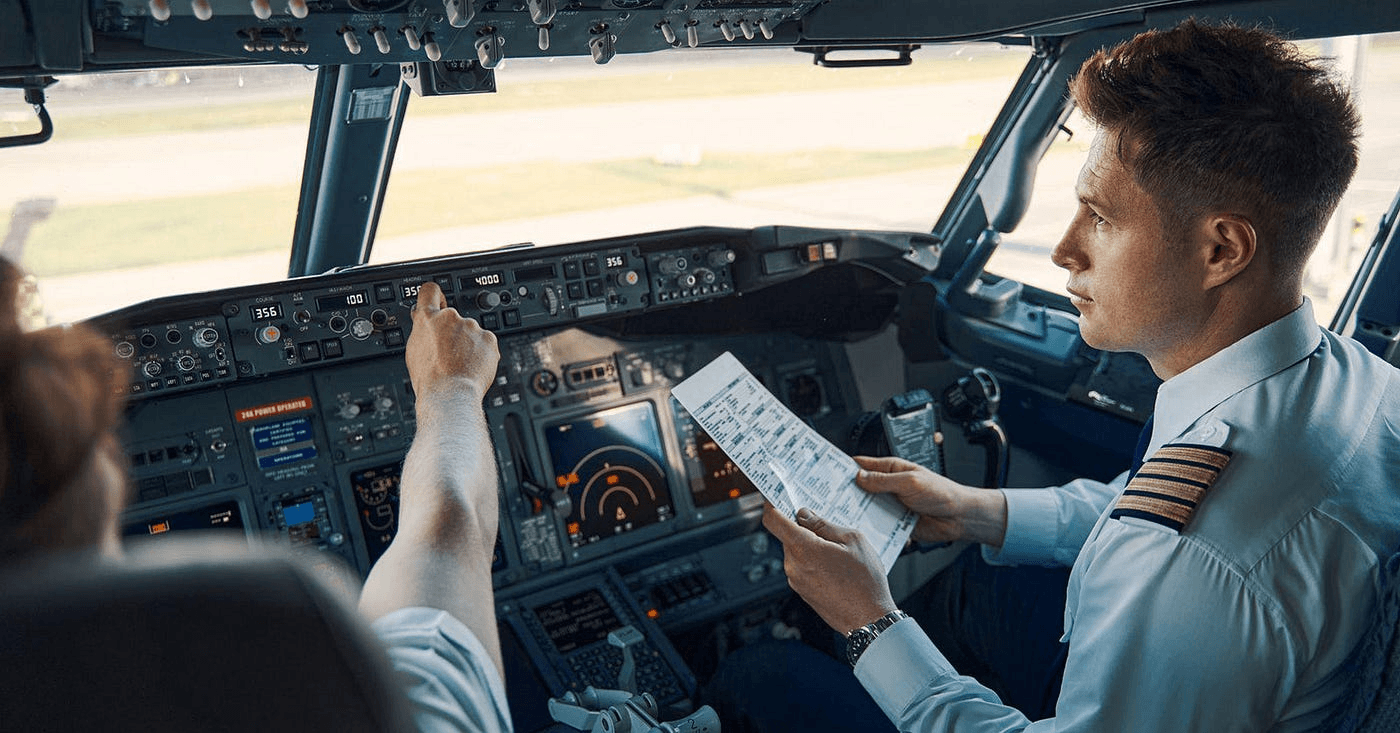
At the controls
In charge of the flight, from departure to arrival
- Flight safety
- Crew work
- Aviation English
- Decision-making
- Rigour & procedures
An airline pilot's missions
Ensuring flight safety
Safety is the airline pilot's absolute priority. Before, during and after the flight, they apply precise procedures to ensure the mission runs smoothly. They check flight information, analyse the weather, monitor the aircraft's systems and anticipate any unusual situations.
Preparing the flight
Before every take-off, the crew studies the flight file: planned route, weather, fuel, aircraft performance, airport information and operational constraints. This preparation lets them anticipate the flight conditions and make the best decisions before even entering the cockpit.
Flying as a crew
An airline pilot never works alone. They operate as a crew, usually with a captain and a first officer. Each has a specific role, but important decisions are shared and framed by procedures. Crew work calls for clear communication, coordination and mutual trust.
Communicating with air traffic control
During the flight, pilots regularly talk with air traffic controllers: clearances, route changes, traffic conditions, arrival and departure procedures. Aviation English is essential, as it is the international language of aviation.
Handling the unexpected
Weather, traffic constraints, a runway change, a diversion, a technical or medical situation on board: the pilot must be able to analyse a situation quickly and make an appropriate decision. Handling the unexpected is an integral part of the job.
Coordinating with the teams around the flight
The pilot works with the cabin crew, ground teams, operations, maintenance and air traffic control. Every flight relies on precise coordination between several parties.
A typical day for an airline pilot
A pilot's day is far more than take-off and landing: much of the work happens before the flight — in preparation, coordination and anticipation.
Pre-flight briefing
The day begins by studying the flight file. The crew analyses the weather, the route, the aircraft's performance, the fuel needed and information about the departure and arrival airports.
Cockpit preparation
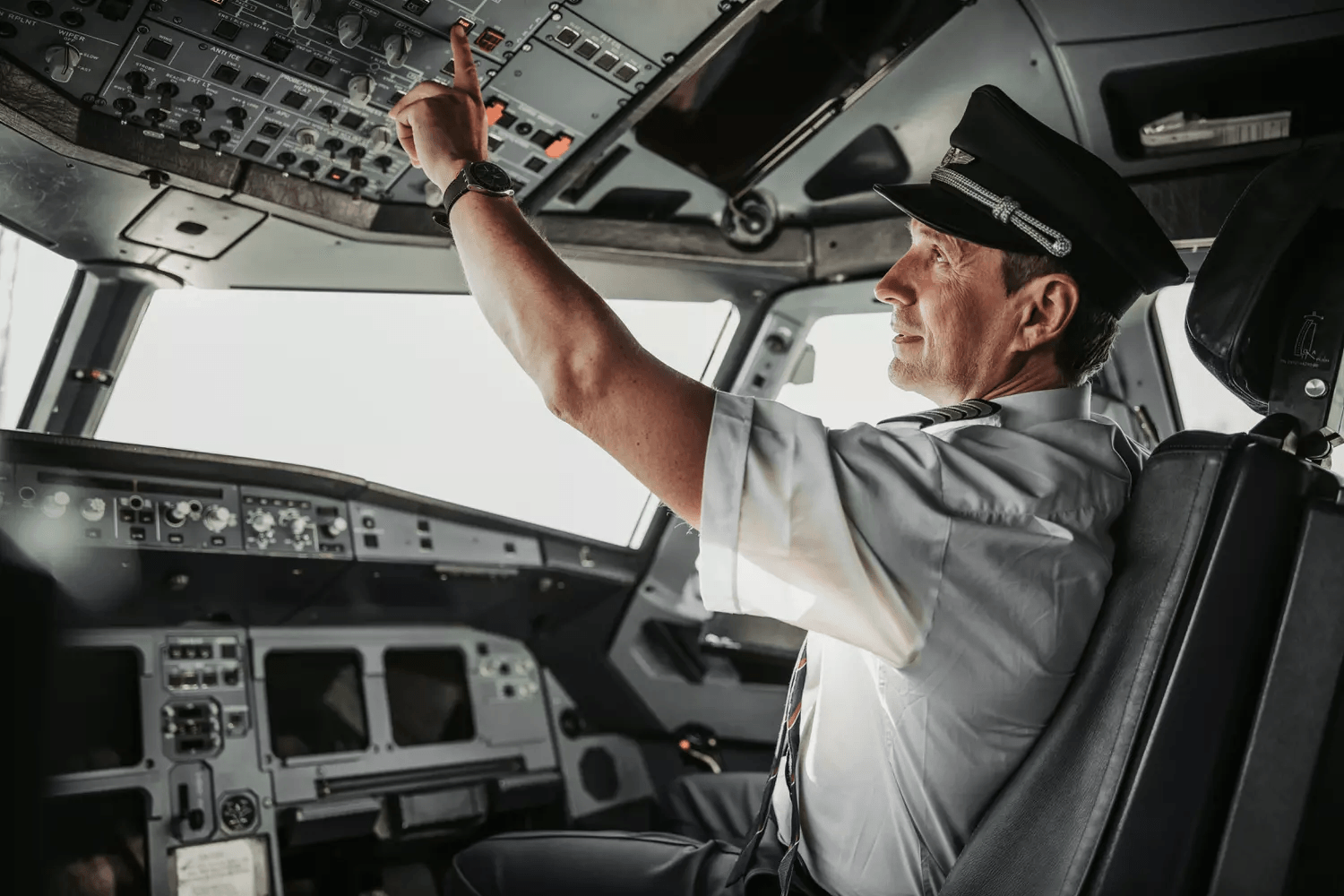
Once on board, the pilots prepare the flight deck. They check the instruments, program the navigation systems, review the documents and carry out the pre-departure procedures.
Take-off and climb
After clearance from air traffic control, the crew carries out the take-off. This phase demands maximum concentration, as it is one of the most sensitive moments of the flight.
Cruise
During the cruise, pilots monitor the flight parameters, the aircraft's systems, fuel consumption, the weather and radio communications. Even with a stabilised flight path, the crew stays constantly alert.
Approach and landing
The approach and landing are prepared in advance: arrival procedure, local weather, active runway and required performance. Landing calls for precision, coordination and anticipation.
After the flight
Once the aircraft is parked, the crew completes the procedures, fills in the required documents and may prepare the next flight.
Captain and First Officer: what's the difference?
- Entry-level role
The First Officer
The First Officer plays a full part in operating the flight. They plan the flight, fly the aircraft, communicate with air traffic control, monitor the systems and share tasks with the Captain. It is usually the first role held within an airline.
- In charge of the flight
The Captain
The Captain is responsible for the aircraft, the crew, the passengers and the smooth running of the flight. They make the final decisions, particularly in unusual situations. With experience, a First Officer can progress to the role of Captain.
A thrilling but demanding profession
The airline pilot profession is a dream job, but it also calls for real discipline. Hours can be irregular, nights away from home frequent depending on the airline, and responsibility remains high on every flight.
It is also a tightly regulated profession: regular training, simulator checks, medical examinations, strict procedures and continuous maintenance of skills.
Irregular hours
Days can start very early, finish late or include night flights.
High responsibility
Flight safety remains the absolute priority, at every stage.
Ongoing training
A pilot keeps training and being assessed throughout their career.
Personal life to organise
The rhythm varies with the airline, the network, the type of flights and the rosters.

Do you see yourself in this profession?
Discover Astonfly's training programmes or come and meet us at an open day.
The qualities you need to become an airline pilot
Being an airline pilot takes far more than technical skills. It calls for a personality suited to the responsibilities of the cockpit.
Rigour
Procedures must be followed precisely. Rigour is essential to ensure the safety and reliability of operations.
Composure
A pilot must stay calm and clear-headed, even in unexpected situations or under pressure.
Team spirit
The cockpit runs on coordination. A good pilot knows how to listen, communicate and work with the other crew members.
A sense of responsibility
Every decision can have a major impact. The pilot must be aware of their responsibilities at all times.
Analytical ability
A pilot must be able to process several pieces of information at once, identify priorities and make quick decisions.
Aviation English
Aviation English is essential to communicate with air traffic control, understand procedures and work in an international environment.
Motivation and discipline
The training and career demand a major commitment. You need to be ready to keep learning throughout your working life.
A profession open to the world
The airline pilot profession can open the door to an international career. Depending on their licence, experience, ratings and airline needs, a pilot can work in France, Europe or other regions of the world.
Aviation English is essential: it is used in radio communications, procedures, training and the international operational environment.
Each country and airline, however, applies its own conditions: licence recognition or conversion, right to work, minimum experience, medical fitness or a type rating on a given aircraft.
Keys to an international career
A recognised, convertible licence
An EASA licence is a recognised foundation in many countries. Depending on the destination, a conversion or additional steps may be required.
Opportunities all over the world
Pilots can apply to airlines in Europe and other regions, depending on their experience, ratings and recruitment needs.
Conditions specific to each country
Right to work, licence recognition, experience level, type rating and language requirements vary by authority and airline.
A constantly evolving profession
Aviation is constantly evolving: new aircraft, new technologies, new procedures, cockpit digitalisation, environmental requirements and European or international regulation.
So an airline pilot must keep training regularly. Even after obtaining their licences and ratings, they undergo periodic training — particularly in the simulator — to maintain their skills and remain fit to fly.
It is a profession where the learning never stops.
Why does the airline pilot profession inspire so many?
Passion, technical mastery, travel, responsibility and prospects: this is what drives thousands of young people each year to aim for the cockpit.
It is also a demanding profession, calling for discipline, motivation and a real capacity for work — but for anyone who dreams of aviation, becoming an airline pilot remains an ambitious, tangible and deeply rewarding goal.
Discovering new horizons
Depending on the airline and network, the job can let you travel, discover new destinations and work in an international environment.
A high-tech cockpit
Flying modern aircraft, using advanced systems and working in a high-level technical environment.
Real responsibility
Every flight calls for rigour, preparation, decision-making and a sense of safety.
Progression prospects
With experience, a first officer can progress to captain, then to other roles: instructor, examiner or operational management.
A varied daily life
Hours, crews, weather, destinations and operations change regularly.
A sector that's hiring
The need for pilots remains high in the long term, driven by traffic growth, retirements and fleet renewal.
The airline pilot profession in brief
The airline pilot is a highly qualified professional responsible for operating commercial aircraft safely. The job combines flying, preparation, analysis, communication, crew teamwork and decision-making. It is a demanding, international and evolving career that calls for rigour, composure, motivation and command of Aviation English.
- A safety-centred profession
- Working as a crew
- International prospects
- A strong technical dimension
- Ongoing training
- Progression to Captain
FAQ — The airline pilot profession
Going further
How to become an airline pilot?
The steps, the prerequisites and how long the path takes.
Learn moreAirline pilot salary
Pay, progression and the difference between first officer and captain.
Learn moreThe EASA licence
The European framework, the licences, the ratings and the equivalences.
Learn moreMarket & recruitment
A sector in high demand and the job prospects.
Learn moreEmployability
The employability results of Astonfly students.
Learn moreOur programmes
One training track for two programmes.
Learn more