
The profession
Astonfly2 min read
Devenir pilote de ligne suppose d’obtenir une licence CPL assortie des qualifications qui permettent d’exercer en compagnie aérienne : le vol aux instruments, le multimoteur et le travail en équipage. En France, ce parcours se conduit au sein d’un ATO, un organisme de formation agréé par l’EASA.
Il n’existe pas de diplôme unique. La formation combine une partie théorique, une partie pratique en vol et une phase consacrée à l’environnement multipilote, chacune sanctionnée par ses propres épreuves.
Trois conditions structurent l’accès : être majeur, disposer d’un niveau d’anglais suffisant pour la phraséologie et la documentation, et obtenir un certificat médical de classe 1 délivré par un centre aéromédical agréé. Ce certificat conditionne l’entrée en formation pratique : la démarche se lance tôt, les délais de rendez-vous variant selon les centres.
Le baccalauréat n’est pas exigé réglementairement, mais l’aisance en mathématiques et en physique reste un atout réel pour aborder la théorie.
The theory part covers thirteen ATPL subjects, from air law to human performance, via meteorology, navigation and principles of flight. Added to this are the 100 KSA, which assess the knowledge, skills and behaviours expected in operational situations.
Exams are taken before the national authority. This phase calls for method and regular, organised personal study.
Flight training starts on a single-engine aircraft, with basic handling, navigation, night flying and the first solo flights. It continues on the simulator for procedures and instrument flying, then on a twin for the multi-engine ratings.
UPRT training completes the setup: it teaches how to recognise, prevent and recover from unusual attitudes. The aim is safety, not aerobatics.
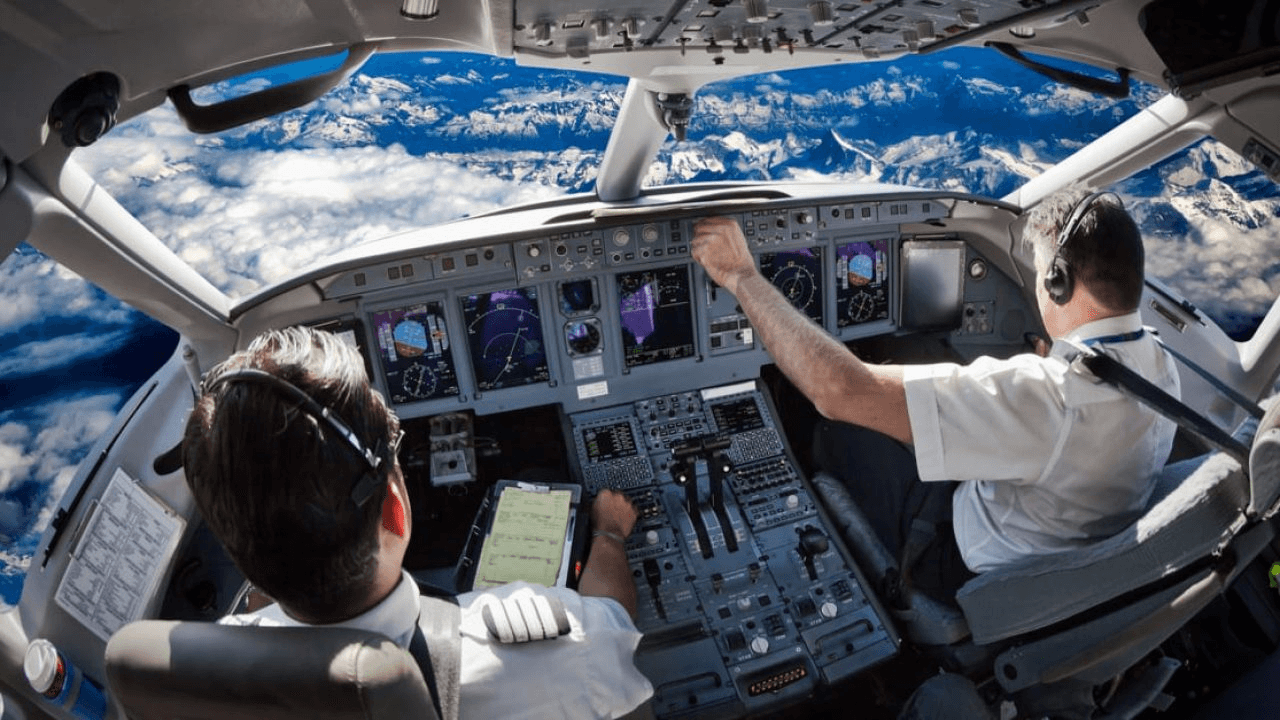
The final phase, the APS MCC, takes place on an airliner simulator. It introduces the split of roles between Pilot Flying and Pilot Monitoring, cockpit communication and multi-crew procedures. It is not a type rating.
A course run continuously is counted in months, not weeks: theory, practice and the APS MCC follow on according to a schedule built with the school. Aircraft availability, weather and each student’s pace of progress make the real duration vary.
No school can guarantee a job at the end of the training. What can be prepared, however, is a strong file and employability worked on from the start of training.
Discover the training that suits you and talk to our admissions team.